Space Regulations and Space Law in India: The New Frontier
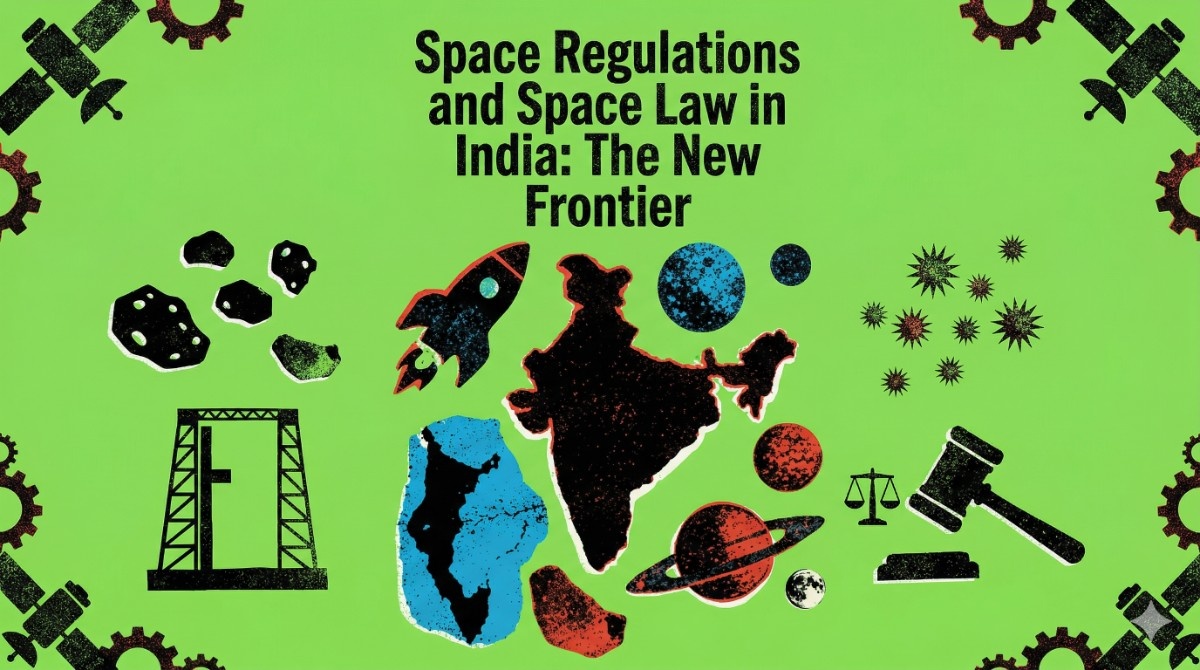
India’s space program has evolved from a government-dominated sector to one embracing private participation. This transformation necessitates comprehensive legal frameworks to govern space activities while promoting innovation and ensuring national security. The Indian Space Research Organisation (ISRO) has led India's space endeavours since 1969. However, until recently, private sector participation was limited. The opening of the space sector in 2020 marked a paradigm shift, requiring new regulatory mechanisms. India is party to key international treaties including the Outer Space Treaty, 1967, the Rescue Agreement, 1968, and the Liability Convention, 1972.
Domestically, the Space Activities Bill (in draft form) aims to provide a comprehensive legal structure. The Indian National Space Promotion and Authorization Center (IN-SPACe) was established in 2020 to facilitate private sector participation. The emerging framework addresses authorization and licensing of space activities, liability for damage caused by space objects, and environmental protection in outer space operations. It also covers intellectual property rights in space-related innovations and international cooperation protocols.
Recent reforms permit private entities to conduct end-to-end space activities including satellite launches, operation of launch vehicles, and establishment of ground stations. Companies must obtain authorization from IN-SPACe, which evaluates technical capability, financial viability, and compliance with international obligations.
Challenges Ahead & The Road Forward
India must balance encouraging private innovation with ensuring activities align with national security interests. Establishing clear liability frameworks when private launches involve international clients poses complex questions. Additionally, developing indigenous capacity while remaining internationally competitive requires careful policy design.
As India positions itself as a major space power, robust legal frameworks will be crucial. The finalization and enactment of comprehensive space legislation will provide certainty to investors while ensuring India meets its international obligations and protects its strategic interests.
References:
- Outer Space Treaty, 1967
- Space Activities Bill (Draft)
- IN-SPACe establishment notification, 2020

Kush Bhardwaj
Legal Researcher | PhD. Scholar
Hey, I'm Kush, a Ph.D Scholar at Manipal University Jaipur, and a legal content creator by passion. Aether Legal is my attempt to build the platform I wished existed when I started studying law: sharp, credible, and built for students & people who want to actually understand the legal system. Read detailed portfolio
Arguments & Observations
Loading discussion…